
How it works

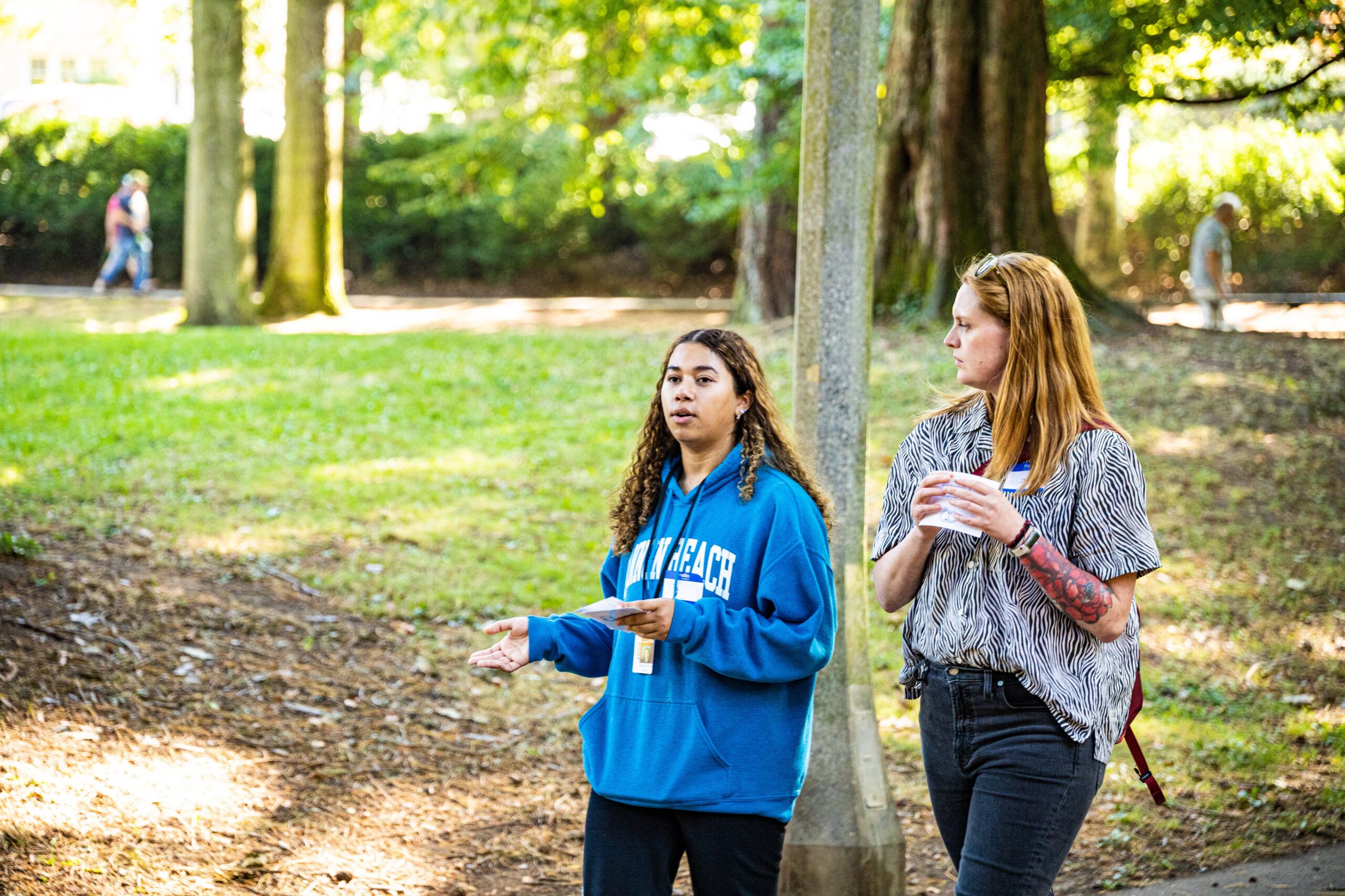
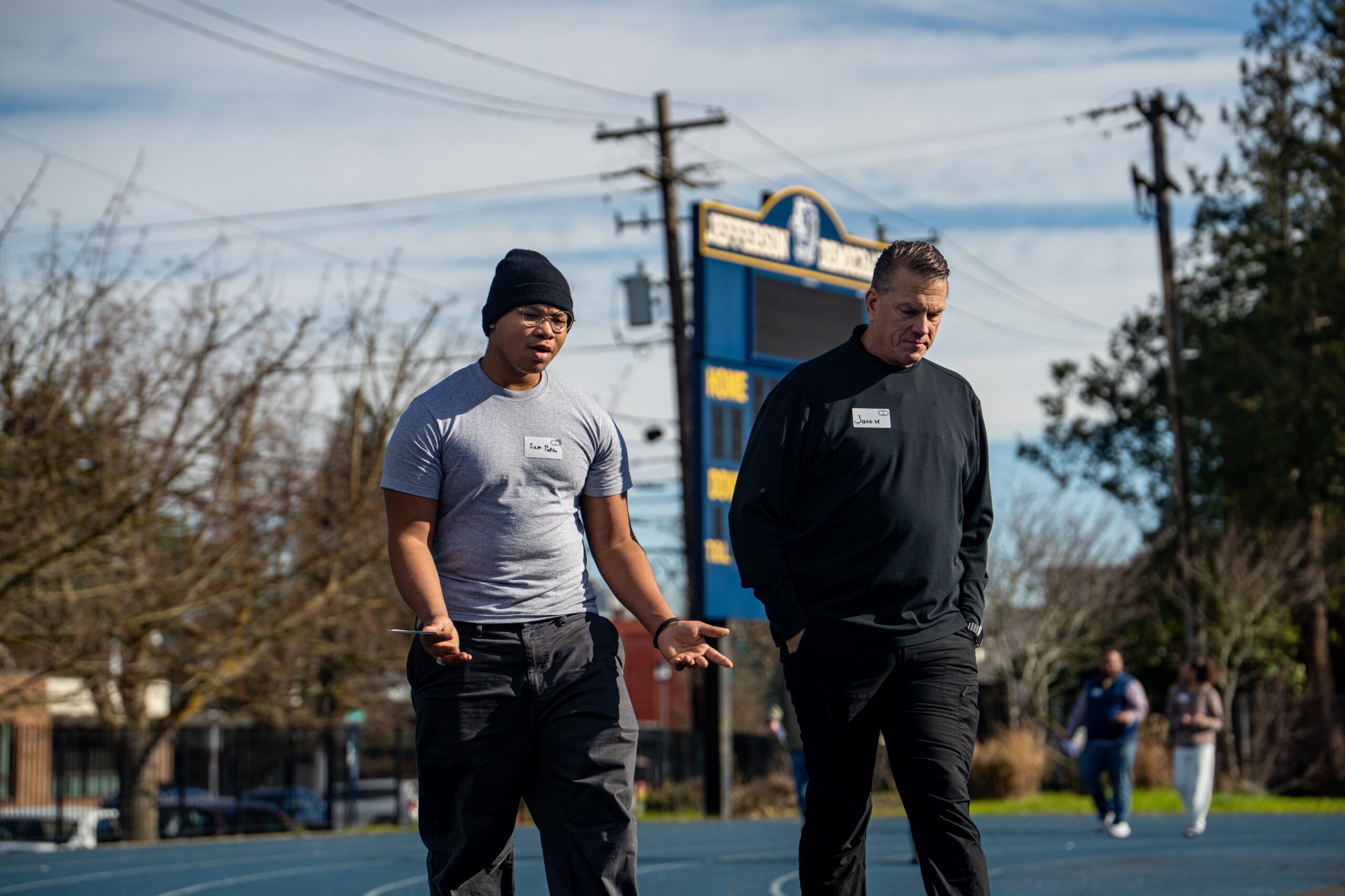
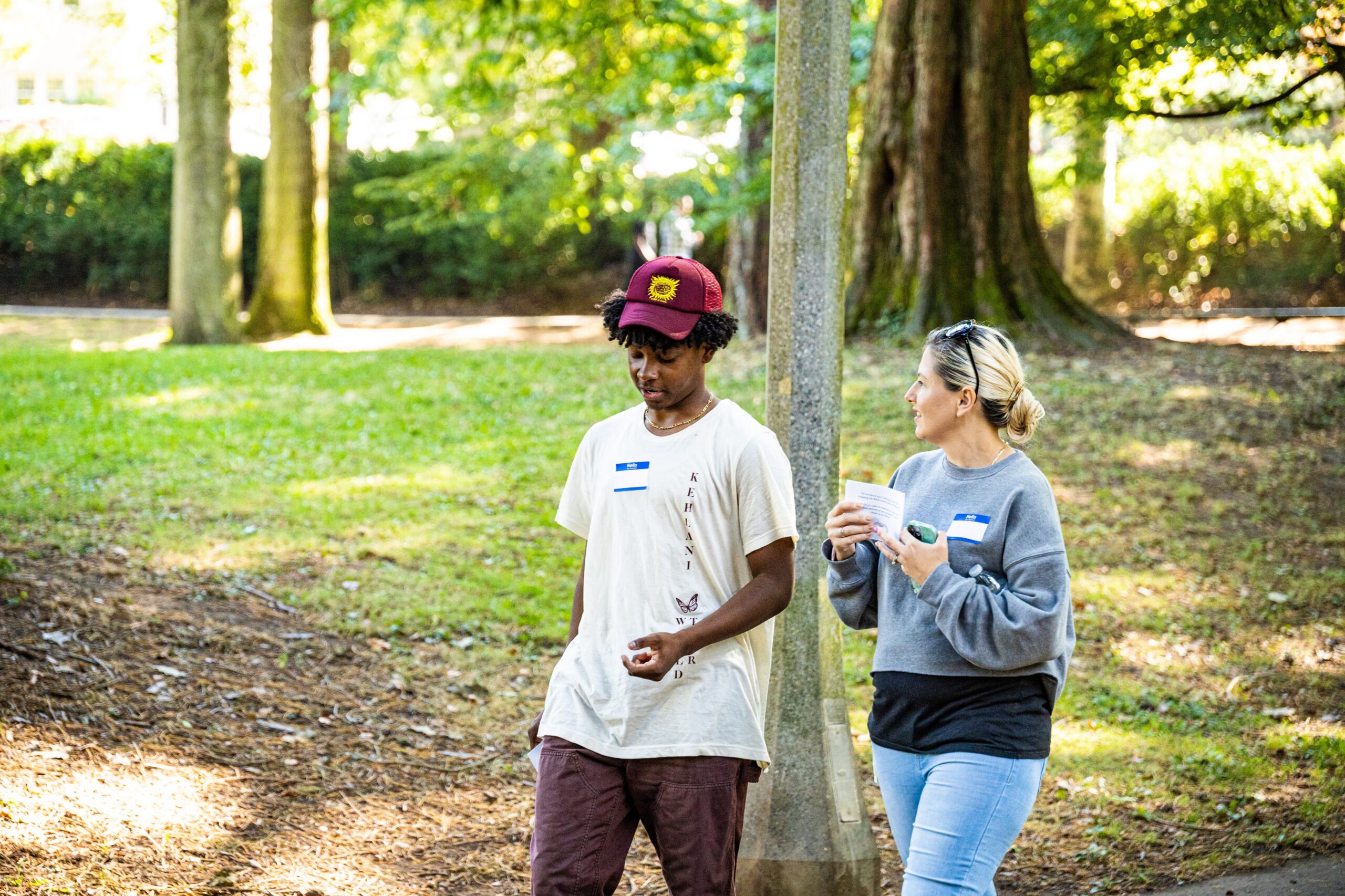
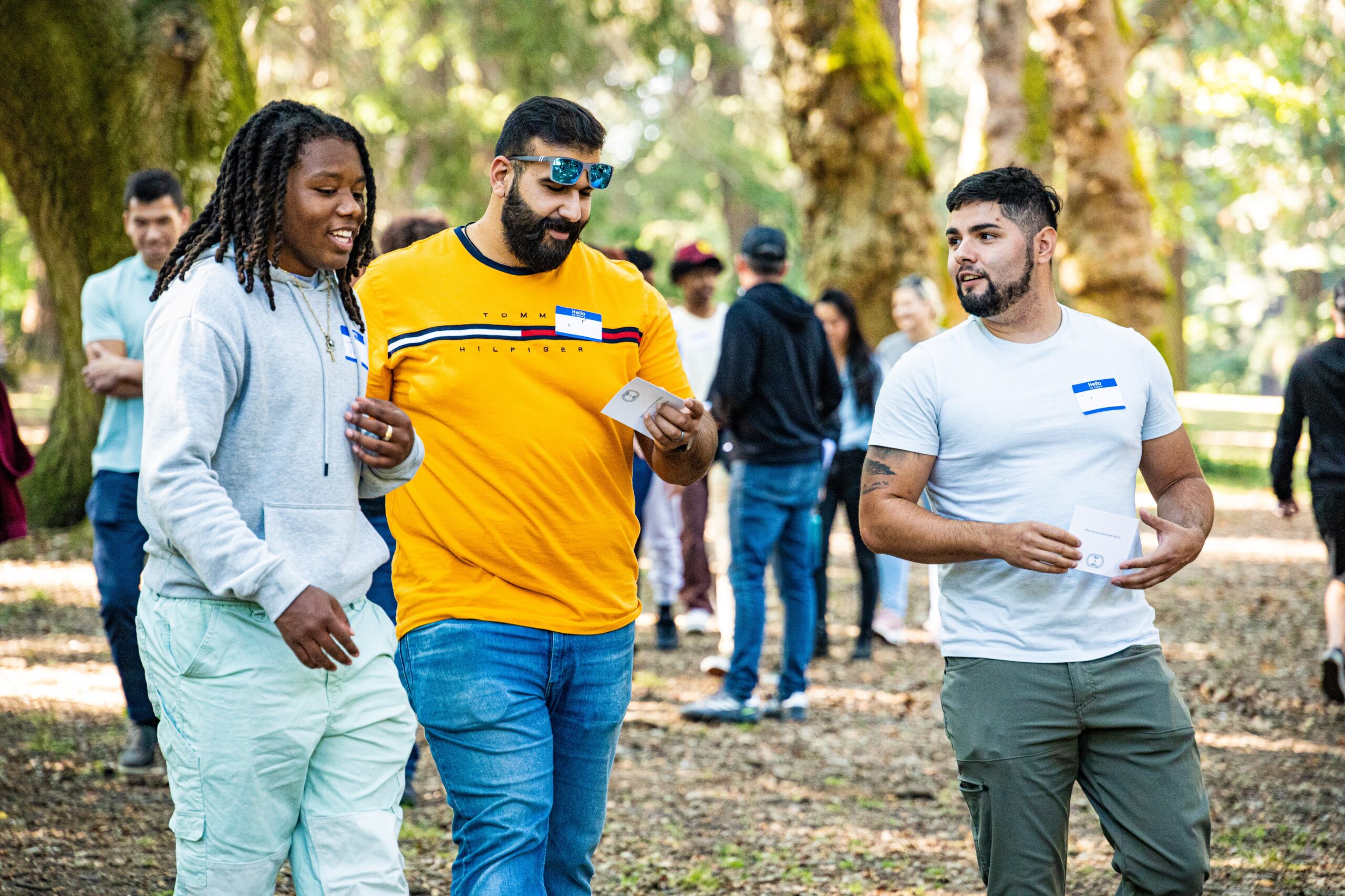
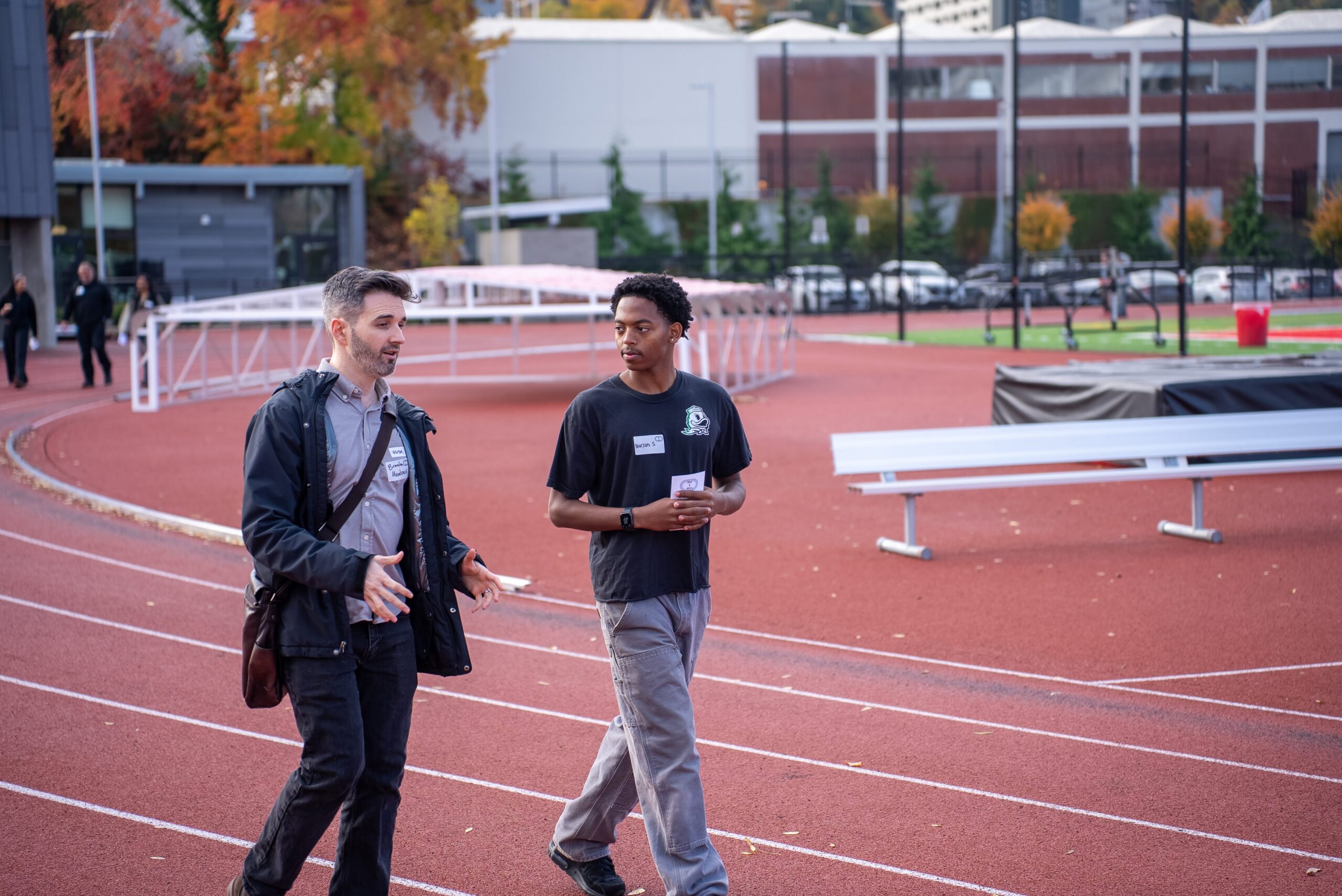
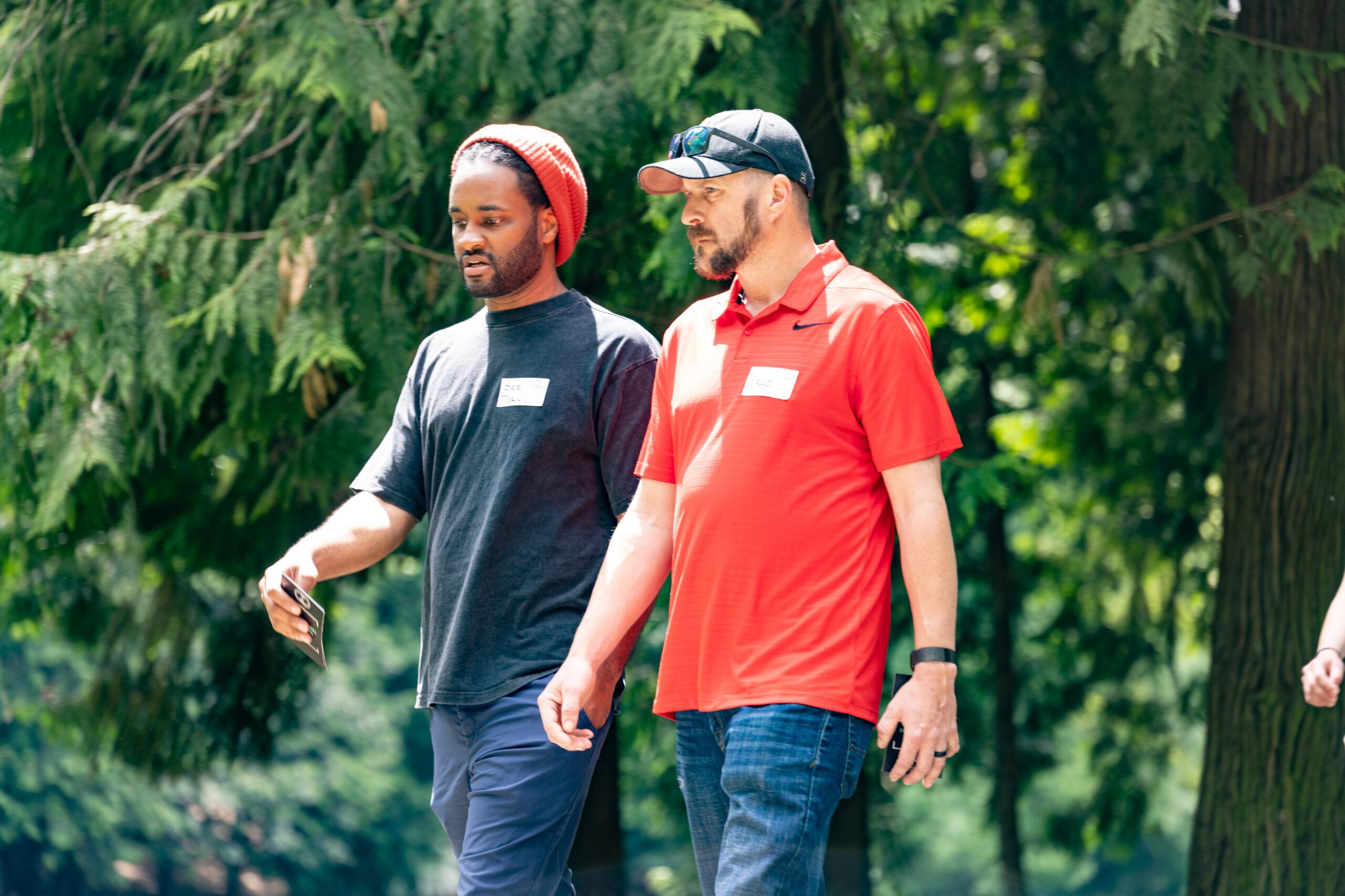
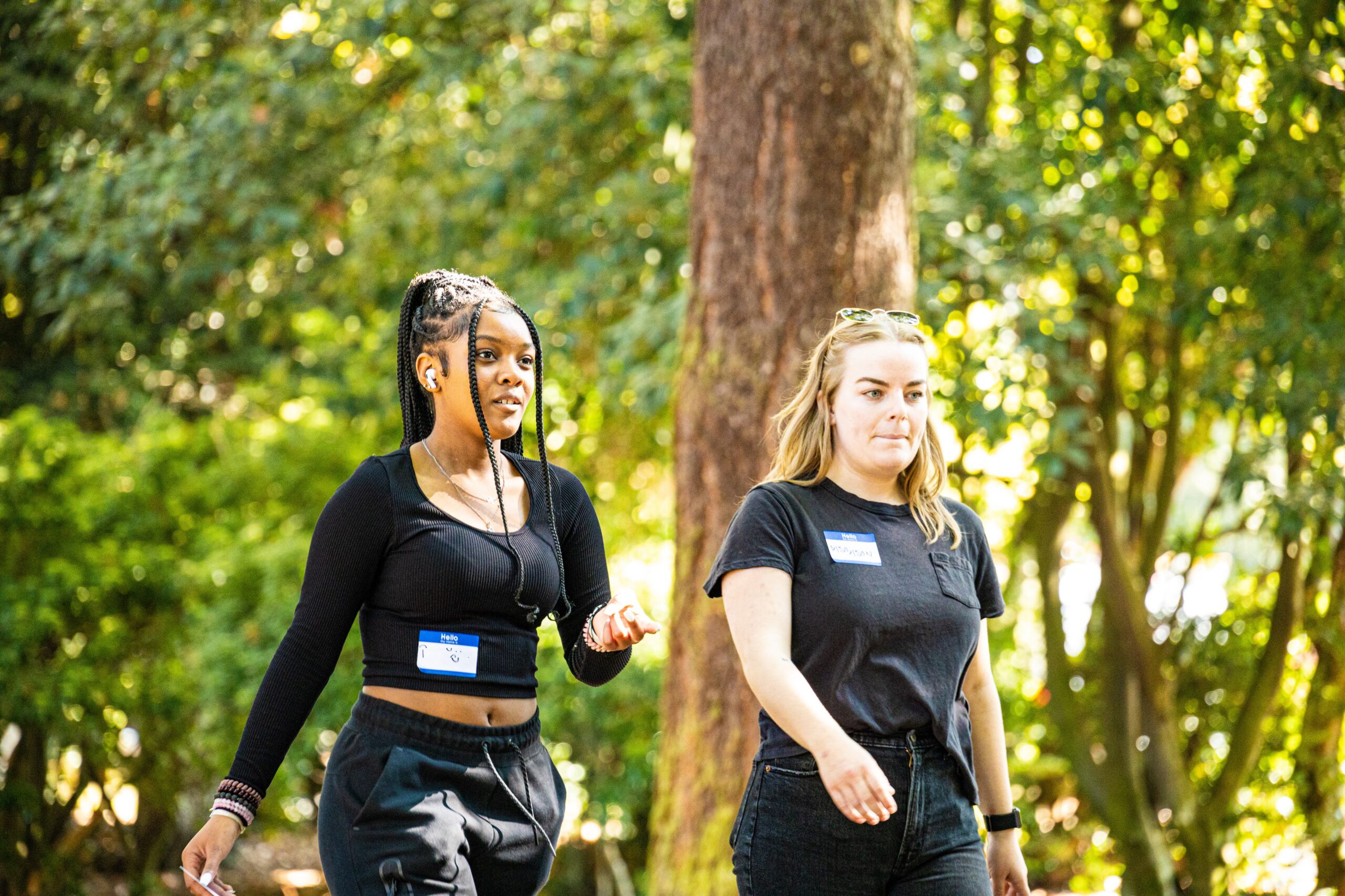
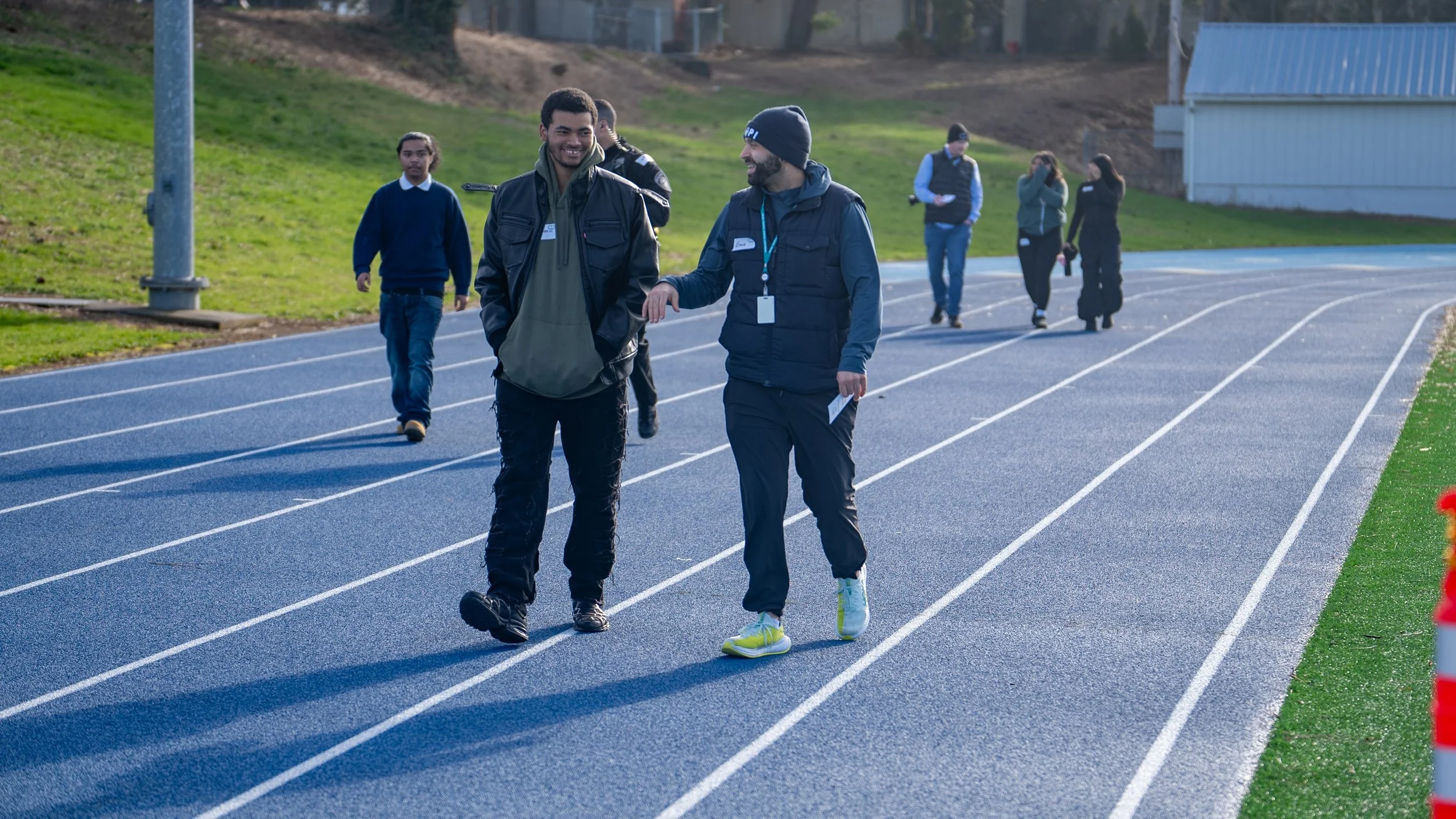
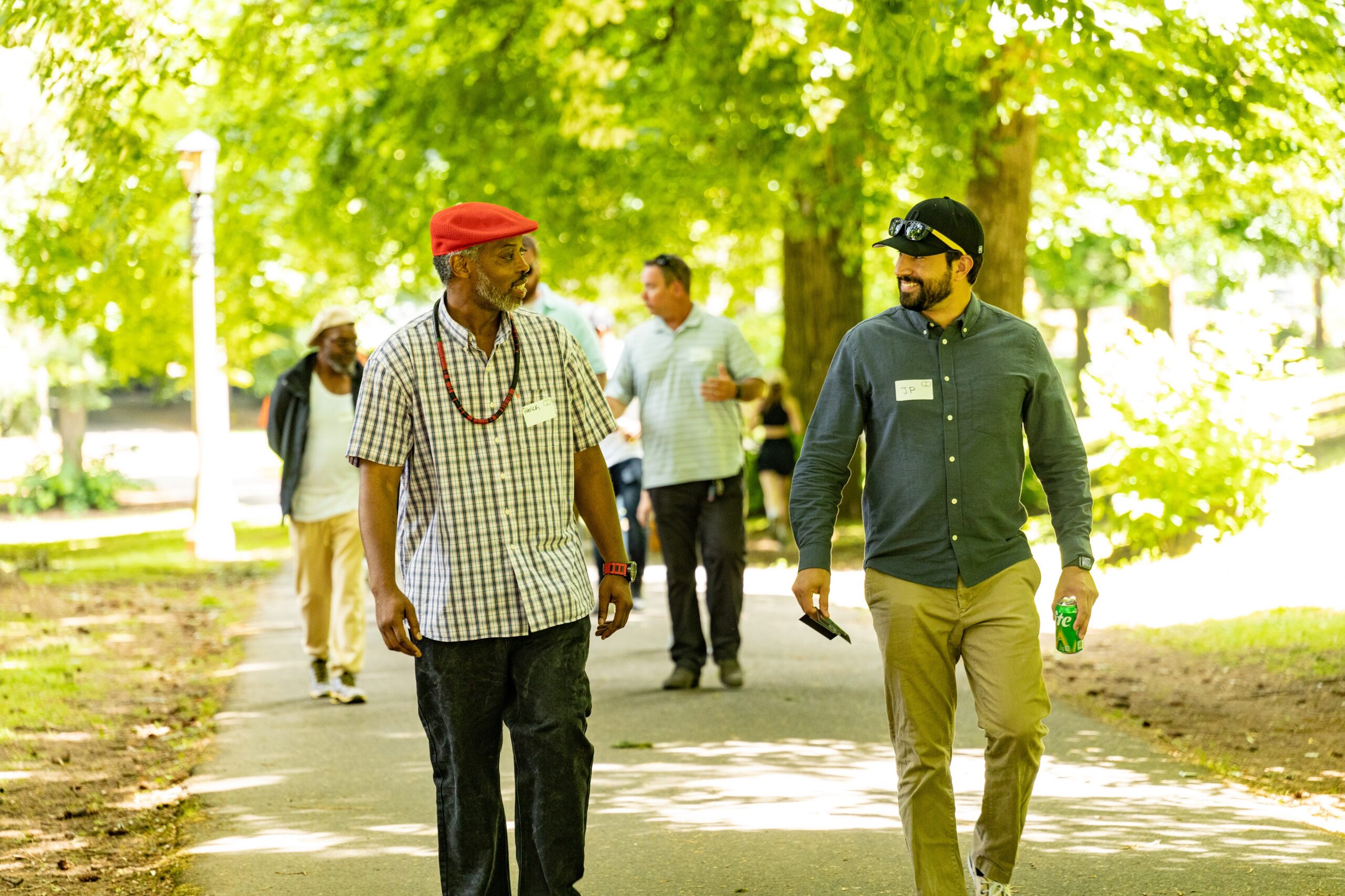
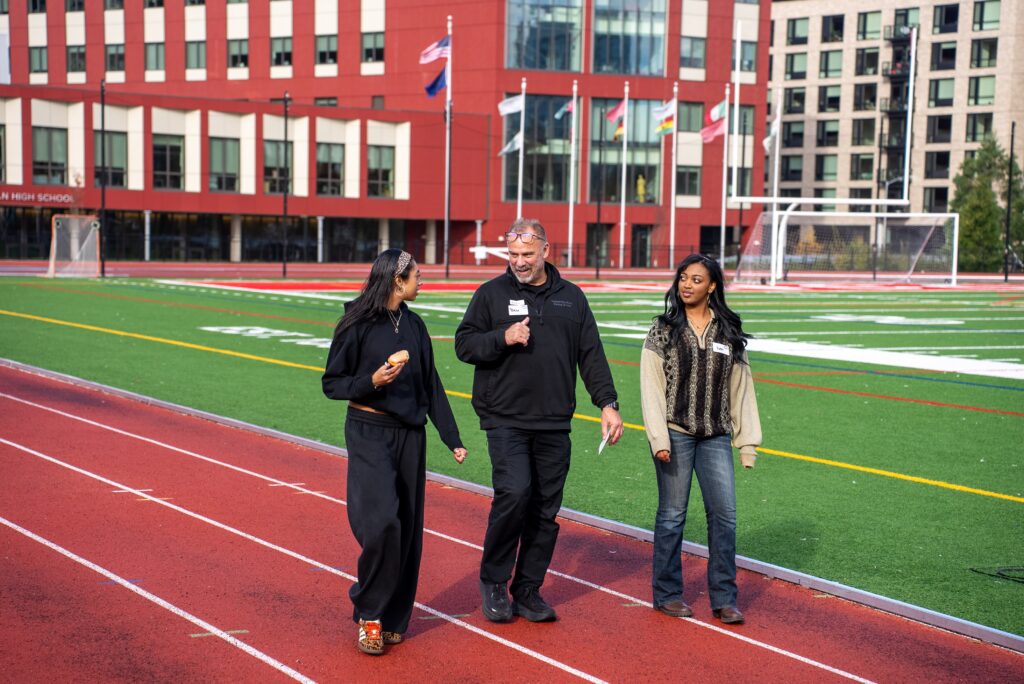
Talk A Mile meets at a local park or track. After opening remarks to set goals and context, we pair people up randomly. Participants walk four laps together while sharing each other’s story, building relationships and trust. Conversation prompts are provided each lap.

Lap 1

The Warm Up

This lap provides an opportunity for both participants to warm up.

The Civic Leader's Story

On this lap, the student or community member hears the police officer, educator, or civic leader's story.

The Community's Perspective

This lap is an opportunity for the student or community member to share their perspective.

Focus On Our Shared Future

This lap focuses on how we can contribute to shaping our future together.

Are you from Portland? How has it changed over the years?
What are you passionate about?
Why did you decide to go into public service, especially here in Portland?
What keeps you grounded, connected, and humble in service to our community?
If the next 5 years is a chapter in your life, what is this chapter about?
What’s something people would be surprised to learn about you?
Can you think of a contribution that would have a positive impact on our community?
What would make Portland a better place to live for you personally?

Participants share their learnings, perspectives, and take-aways through a brief survey. Our approach is workingβ€”98% of survey respondents reported feeling β€œseen and heard” through their participation in Talk A Mile.

Why It Works

The idea is simple: Walk a mile together. Talk 1:1. Share your story and discover what you have in common. How does this build more connection?

Because our model is backed by science. These five research-backed components explain how Talk A Mile is designed to build more connection among our participants with techniques that transform how our brains function when we walk and talk outdoors with questions that evoke curiosity and understanding.

Bilateral 
stimulation

The natural left-right rhythm of walking activates both sides of your brain leading to novel creative ideas and analytical problem-solving. Since walking improves left-right brain communication, this helps you integrate both emotion and logic. Walking also stimulates your body’s relaxation response by balancing mood-boosting chemicals like dopamine and serotonin which reduce stress and anxiety. That’s why conversations on a walk often feel more natural, open, and productive. You’re not just talking differently, you’re actually thinking and feeling differently too.

Interpersonal synchronicity

Walking side by side has a subtle but powerful effect on how we relate to each other. Research shows that even strangers become more in sync both physically and socially, simply by walking together, often leading to stronger first impressions and more positive conversations. The shoulder-to-shoulder dynamic also reduces anxiety, taking the pressure off focusing on eye contact and social cues so people can relax into a more natural connection. Without even realizing it, our steps begin to align and so do our perceptions of one another.

Nature-based environments

Walking outdoors, especially in nature, has been shown to significantly boost mood, reduce stress and overall wellbeing. Natural light and fresh air help lift your mood, while stepping away from everyday environments reduces stress and creates space to think more clearly. That sense of openness and calm makes it easier to relax, lowering defensiveness and helping people feel more comfortable opening up and sharing. Nature also taps into something deeperβ€”often evoking positive memories of being outside, playing, and bonding with others. This can lead to more meaningful conversations, highlighting the powerful role an outdoor environment plays in how we feel, think, and connect.

Deep curiosity questions

Curiosity is one of the simplest and most powerful ways to build connection. Research shows that people who ask more questions, especially thoughtful follow-ups, are consistently better liked and seen as more attentive, understanding, and genuinely caring. Asking questions signals that you’re truly listening, creating space for others to feel heard and valued.

One easy way to practice this is by inviting someone to share the story behind their name. It’s a small question that often opens the door to deeper conversation about family, culture, and personal experiences. When people share their stories, common ground naturally emerges, helping turn a simple exchange into a meaningful connection.

A sense of purpose

Cultivating purpose is linked to our wellbeing, including improved mood, physical health, and potential to thrive. That’s why we focus on conversations that help people explore how they want to contribute to their communities and reflect on their role in creating change. By creating space to talk about personal values and hopes for the future, these conversations help turn a sense of purpose into meaningful actionβ€”strengthening both individuals and the communities they’re part of.

Quote Icon

A genuine and thorough conversation that made me want to strive to be a better person.

— Student
Quote Icon

This was the first thing he talked about when I picked him up today. It seemed like a great event. I hope he’ll keep attending things like this.

— Parent of a student
Quote Icon

I learned that the person I walked with really values the community aspect and idea that law enforcement should have a personal stake in the communities they serve.

— Police Officer
Quote Icon

I had a very humanizing conversation with a police officer and it was interesting because it reminded me they are people just like us.

— Business Leader
Quote Icon

I am more likely to be more engaged in my community. It was nice to meet a recruit who is eager to make a change and be on the up and up. He wants to be part of the community he serves so it was a nice reset for me to look at police differently.

— Community Leader

In Schools

Talk A Mile brings 1:1 walk-and-talk conversations into schools to create meaningful connections between students and the educators who support them including teachers, counselors, principals, and staff. These conversations give students a dedicated space to share their perspectives, speak openly about what helps them thrive, and feel genuinely heard and valued within their school community.

By stepping outside the traditional classroom dynamic and walking side by side, students and educators build trust and understanding in a more natural, less formal setting. Over time, these conversations help strengthen relationships across the school, fostering a greater sense of belonging and showing students that their voices matter. Most importantly, they help young people see that speaking up isn’t just welcomed, it’s a powerful way to shape their environment and create lasting change. We are currently hosting conversations in schools as a pilot program in Portland, Oregon and plan to expand the pilot to more cities.
In Communities

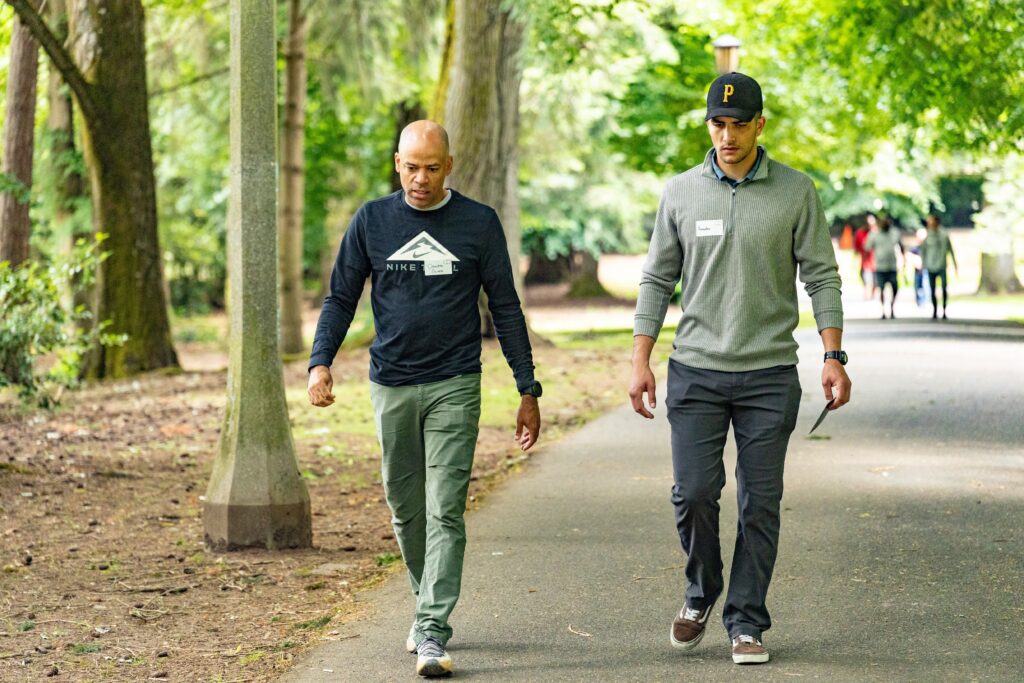
When we talk about β€œthe system,” we often focus on what’s happening at the topβ€”legislation, budgets, national politics. But most people experience β€œthe system” through individuals: a teacher in the classroom, a social worker offering support, a first responder in a moment of crisis, or the officer who is making a traffic stop. That’s why we bring people together in conversation who make up these everyday touchpoints such as educators, students, law enforcement, first responders, city officials, and business and nonprofit leaders.

We create opportunities for people who might not otherwise meet to better understand one another’s roles, challenges, and perspectives. Because change doesn’t just happen from the top down, it happens person to person. And when those conversations are grounded in real relationships, they don’t just build understanding, they lead to stronger civic engagement and more connected, responsive communities.

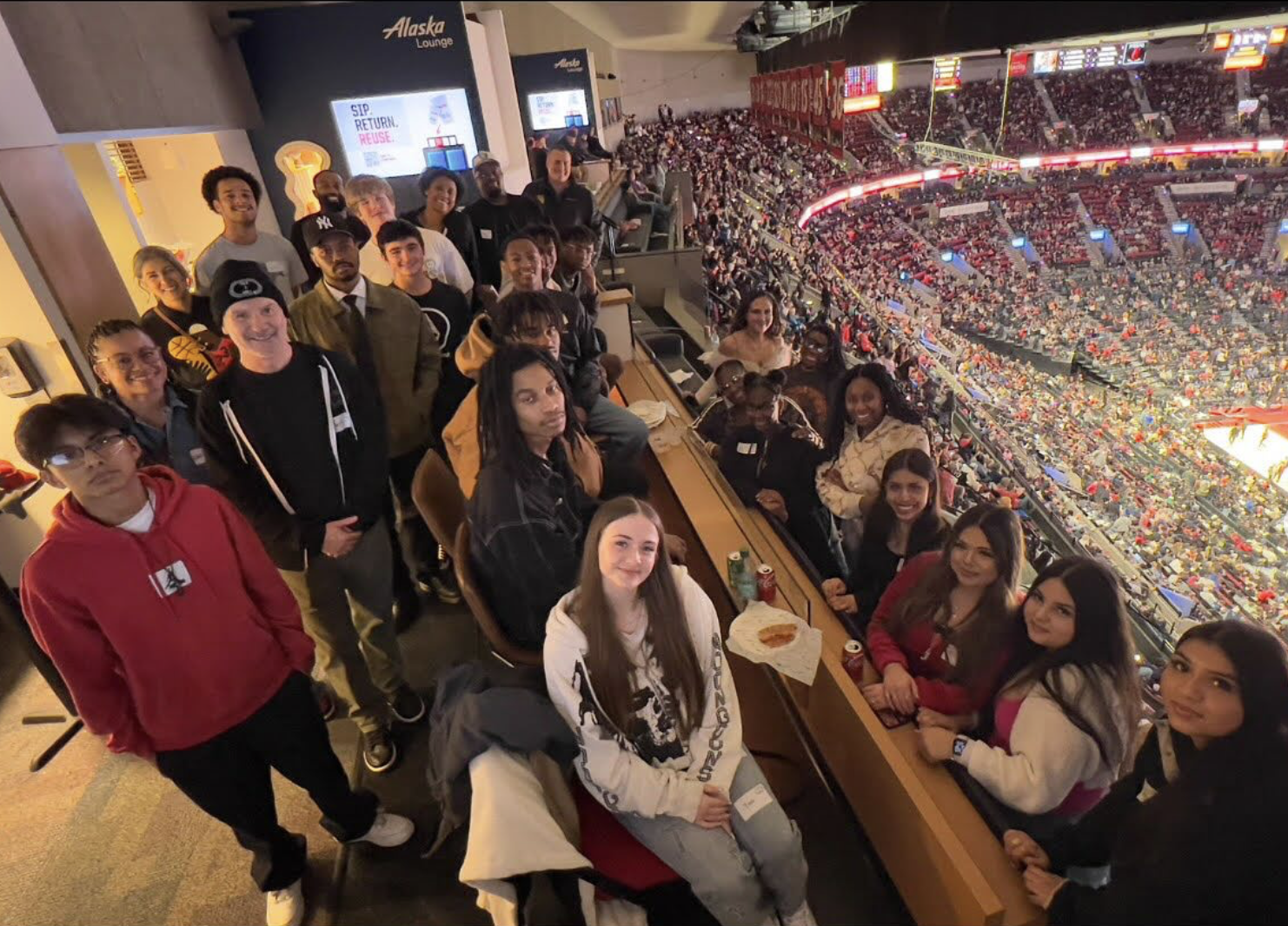
Blazer game December 2025

Next Steps

Many Talk A Mile participants express interest in continuing the conversations and our student participants often seek opportunities for leadership development and civic engagement.

β€œNext Steps” programming provides more of these opportunities provided by Talk A Mile and our nonprofit, government, sports and business partners.